


A diesel vehicle with SCR typically uses AdBlue at around 3–5% of its diesel consumption. For every 100 litres of diesel, plan on roughly 3 to 5 litres of AdBlue. For a heavy truck burning 35 litres of diesel per 100 km, that is about 1 to 1.75 litres of AdBlue per 100 km. The exact figure for your vehicles depends on the engine, the load, the route and how the truck is driven.
Why consumption follows diesel
The SCR system doses AdBlue in proportion to the nitrogen oxides the engine produces, and NOx output rises with the work the engine is doing — which is also what drives fuel consumption. That is why the most reliable simple estimate is a percentage of diesel rather than a fixed amount per kilometre.
Engine makers balance the two differently. Some calibrations let the engine produce more NOx while burning less fuel, then remove it with more AdBlue; others do the opposite. That is one reason two trucks on the same route can show different AdBlue rates.
The basic formula
AdBlue used (litres) = diesel used (litres) × dosing rate
Or, starting from distance:
AdBlue used (litres) = distance (km) ÷ 100 × diesel consumption (L/100 km) × dosing rate
Use 3% for a low estimate and 5% for a high one. Once you have real data from your own vehicles, replace the range with your fleet's actual rate.
Worked example 1: one truck, one week
A tractor unit covers 2,500 km in a week at 35 L/100 km.
- Diesel used: 2,500 ÷ 100 × 35 = 875 litres
- AdBlue at 3%: 875 × 0.03 = about 26 litres
- AdBlue at 5%: 875 × 0.05 = about 44 litres
This truck needs roughly one to two 20-litre jerrycans of AdBlue a week.
Worked example 2: Riyadh to Jeddah
The road distance from Riyadh to Jeddah is roughly 950 km. For a loaded truck at 35 L/100 km:
- Diesel: 950 ÷ 100 × 35 = about 333 litres
- AdBlue: about 10 to 17 litres one way
A round trip needs roughly 20 to 33 litres. AdBlue tank sizes vary widely between models, so check your vehicles' specifications before planning on one fill for the whole journey.
Worked example 3: a 20-truck fleet, per month
Twenty trucks, each covering 10,000 km a month at 35 L/100 km:
| Per truck | Whole fleet | |
|---|---|---|
| Diesel per month | 3,500 L | 70,000 L |
| AdBlue at 3% | 105 L | 2,100 L |
| AdBlue at 5% | 175 L | 3,500 L |
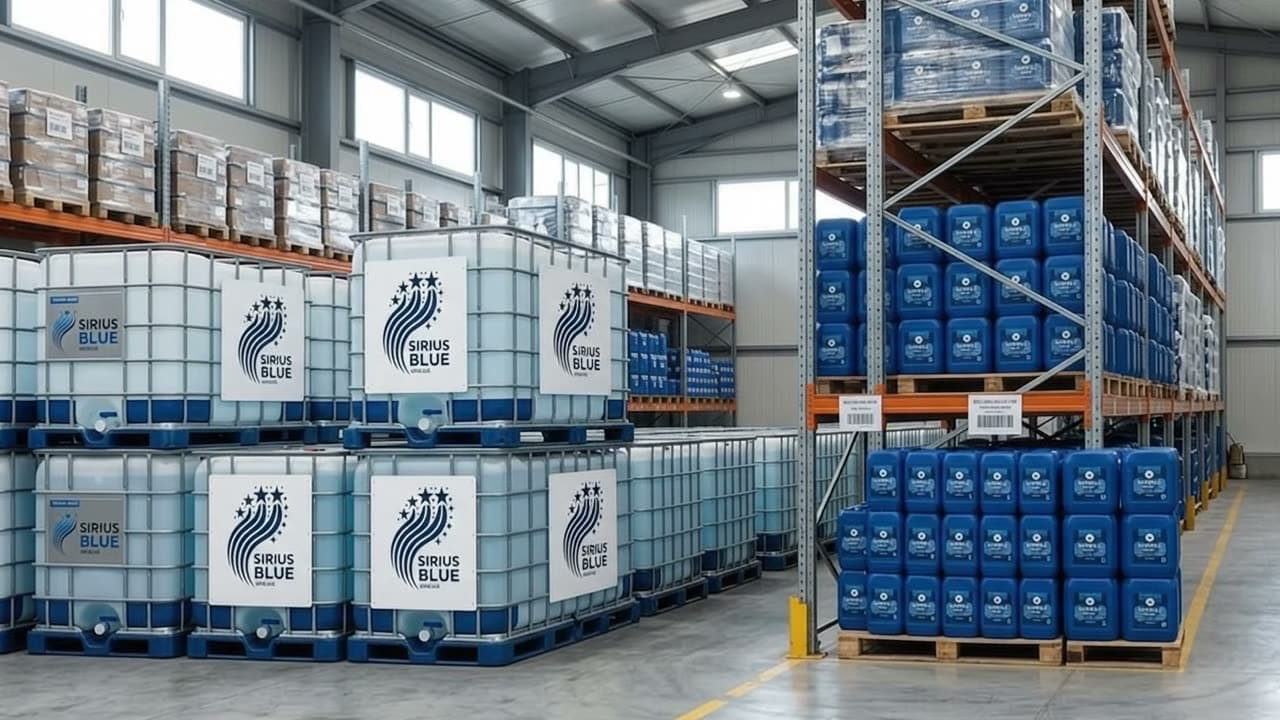
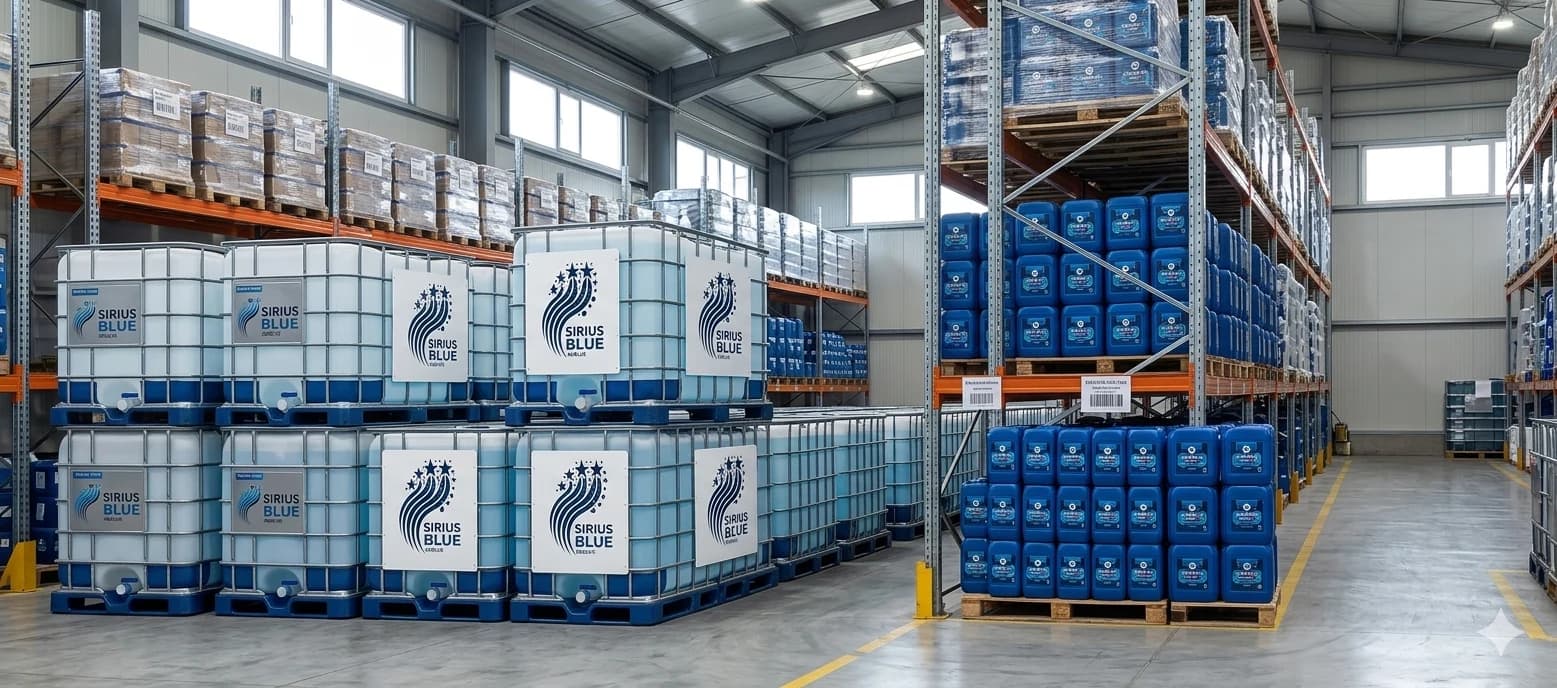
At that volume the fleet uses the equivalent of two to four 1000-litre IBC totes a month. Buying the same volume in jerrycans would mean handling between 105 and 175 twenty-litre containers every month, which is why fleets of this size usually move to IBC totes at the depot. See the packaging guide.
What changes the consumption rate
- Load. A fully loaded truck works harder, burns more diesel and produces more NOx.
- Terrain and speed. Long climbs and sustained high speeds raise both fuel and AdBlue use.
- Stop-start driving. City deliveries with frequent idling and acceleration can raise NOx output relative to distance.
- Heat. High ambient temperatures and air-conditioning load add to the engine's work.
- Engine design. Manufacturers trade fuel economy against AdBlue use differently, so rates vary between makes and models.
- Fluid quality. If the fluid is weak, the system may inject more of it to meet its NOx target, and may flag a fault.
How to measure your fleet's real rate
Estimates are fine for planning, but your own data is better:
- Record diesel and AdBlue fills together for each vehicle over at least a month.
- Divide total AdBlue by total diesel for the same period. The result is that vehicle's dosing rate.
- Compare vehicles of the same model. A truck using clearly more or less than its twins may have a leak, a sensor fault or a dosing problem worth checking.
- Use the fleet average to set order quantities and delivery frequency.
Many telematics systems and engine control units also report AdBlue level and consumption directly.
Turning consumption into an ordering plan
Once you know your monthly volume:
- Size deliveries so stock is used well within its shelf life. In Saudi summer conditions, holding many months of stock is a false economy if part of it degrades — see the storage guide.
- Keep a buffer sized to your delivery lead time and your busiest periods.
- Split packaging by use: bulk at the depot, jerrycans for vehicles that refuel away from base.
SiriusBlue supplies AdBlue from Riyadh in 10L and 20L jerrycans, 200L drums on request and 1000L IBC totes, with standing delivery schedules for fleets. Send us your monthly volume and delivery city and we will propose a schedule and a quote.
Quick answers
How far does 10 litres of AdBlue go?
For a heavy truck burning 35 litres of diesel per 100 km, roughly 570 to 950 km, depending on whether it doses at 5% or 3%. Lighter vehicles that burn less diesel go considerably further on the same amount.
Does AdBlue consumption rise in summer?
It can, because heat and air-conditioning load add to the engine's work, and engine work drives both fuel and AdBlue use. The size of the effect varies by vehicle, so compare your own fill records across seasons.
Is high AdBlue consumption a sign of a fault?
It can be. A leak, a dosing fault or poor-quality fluid can all raise consumption. A vehicle using noticeably more than identical vehicles doing similar work is worth checking.
Does an idling engine use AdBlue?
Little or none. Most SCR systems only dose once the exhaust is hot enough to break the urea down, so idling uses very little AdBlue — though long idling can encourage deposits, as our problems guide explains.
Key points
- Plan on roughly 3–5 litres of AdBlue for every 100 litres of diesel.
- A heavy truck at 35 L/100 km uses about 1–1.75 litres of AdBlue per 100 km.
- A 20-truck fleet covering 10,000 km per truck per month needs roughly 2,100–3,500 litres a month.
- Load, terrain, driving style, heat and engine design all change the rate.
- Measure your fleet's real rate from fill records and use it to plan deliveries.