

AdBlue does expire. Under ISO 22241-3, fluid kept at or below 25°C should stay within specification for at least 18 months. At a constant 30°C that falls to 12 months, and at 35°C to 6 months. Above 35°C the standard gives no minimum, and each batch should be checked before use. In a Saudi summer, where outdoor temperatures regularly pass 40°C, storage conditions decide how long your AdBlue is actually good for.
Why AdBlue has a shelf life
Urea dissolved in water is not permanently stable. Over time, and much faster in heat, it breaks down into ammonia and carbon dioxide. Two things happen to the fluid as a result:
- The urea content drops below the 32.5% the vehicle's SCR system is calibrated for.
- Alkalinity rises as ammonia forms, and the fluid can drift outside the limits in ISO 22241-1.
An SCR system dosing weak or degraded fluid removes less NOx than it should, which can trigger emissions warnings. The change is invisible — degraded AdBlue still looks clear. A strong smell of ammonia when you open a container is the only everyday clue, and by that point the fluid should be tested before it goes into a vehicle.
Shelf life by storage temperature
ISO 22241-3, the part of the standard that covers handling, transport and storage, links minimum shelf life to the constant storage temperature:
| Constant storage temperature | Minimum shelf life |
|---|---|
| Up to 25°C | 18 months |
| Up to 30°C | 12 months |
| Up to 35°C | 6 months |
| Above 35°C | Not defined — check each batch before use |
Two points about reading this table:
- It assumes a constant temperature. Real storage swings between day and night. What counts is the time spent hot, so a container that reaches 45°C every afternoon is closer to the bottom row than its night-time temperature suggests.
- Shelf life starts at production, not delivery. Fluid that spent weeks in a shipping container crossing the Gulf in summer, then more time in a port yard, arrives with part of its life already used. Always ask when it was made.
What Saudi conditions do to AdBlue
Riyadh summer afternoons commonly reach the mid-40s °C, and the air inside a closed steel container, a truck body or a sun-facing storeroom can be well above that. Direct sun on a plastic jerrycan heats the fluid inside quickly.
In practice this means:
- Fluid stored outdoors without shade from June to August can sit in the "above 35°C" row for much of every day.
- A stock that would last well over a year in a cool warehouse may need using within months if storage is hot.
- Buying a year's supply at once to save money can cost more if part of it degrades before it is used.
The broader lesson is that supply chain length matters. AdBlue blended and filled locally reaches the customer with more of its shelf life intact than fluid that has been shipped in, simply because it has spent less time in transit.
How to store AdBlue properly
Temperature and sunlight
- Keep containers indoors or under a roof, out of direct sunlight.
- Use the coolest storage you have. A ventilated warehouse is far better than a steel container in the yard.
- Where you hold large volumes through the summer, consider an insulated or air-conditioned storeroom.
- Keep AdBlue away from heat sources such as generators and compressors.
Containers and contamination
- Keep containers sealed until use. Open containers let dust in and let water evaporate, which changes the concentration.
- Use only equipment made for AdBlue: funnels, hoses, pumps and nozzles in stainless steel, high-density polyethylene (HDPE) or polypropylene.
- Never reuse containers or funnels that have held oil, coolant, diesel or tap water. Tiny amounts of contamination can take the fluid out of specification.
- Keep AdBlue away from copper, brass, zinc (including galvanised steel), aluminium and ordinary carbon steel. It corrodes them, and the dissolved metal contaminates the fluid.
Stock rotation
- Record the production date and delivery date of every delivery.
- Use first in, first out: the oldest stock goes into vehicles first.
- Match order size to consumption, so stock turns over well within its expected shelf life in your conditions. The consumption guide shows how to estimate a fleet's monthly volume.
Storage by packaging type
| Packaging | Typical use | Storage notes |
|---|---|---|
| 10L and 20L jerrycans | Workshops, small fleets, top-ups on the road | Keep only the stock you need in vehicles; cabs and toolboxes get very hot. |
| 200L drum | Mid-size depots and workshops | Store upright on a pallet indoors, use a dedicated drum pump, and keep the bung closed. |
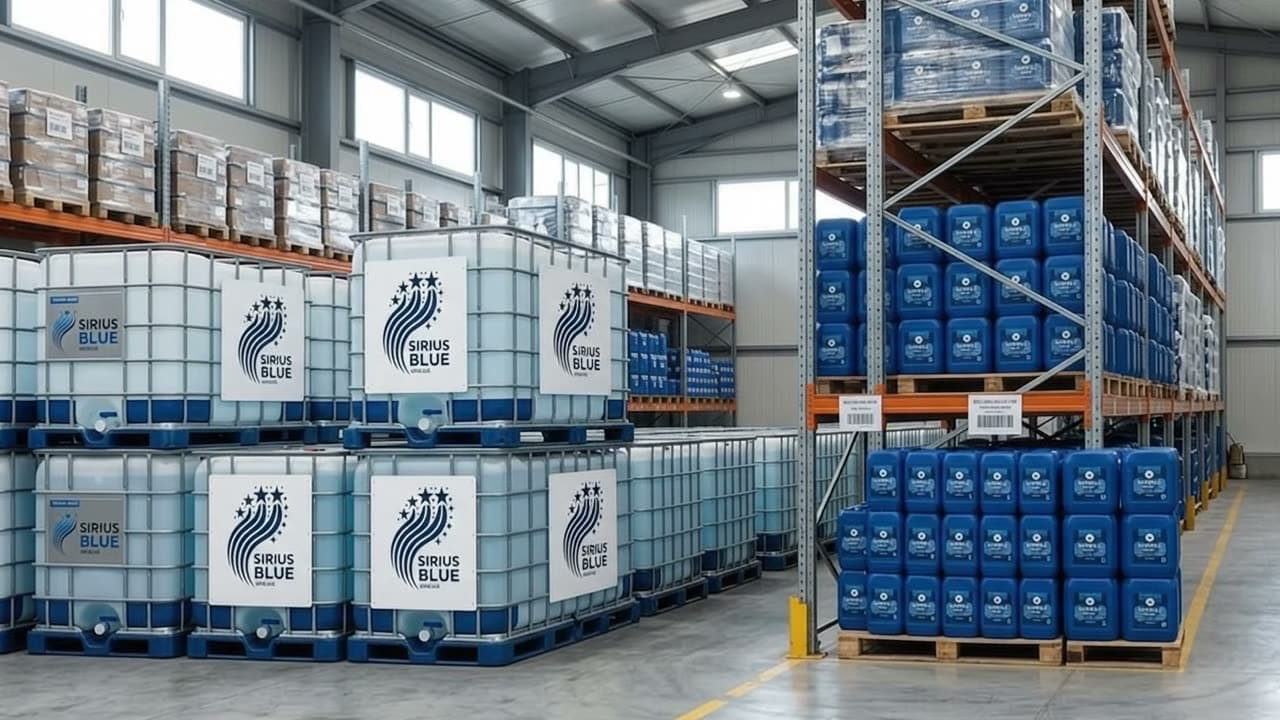
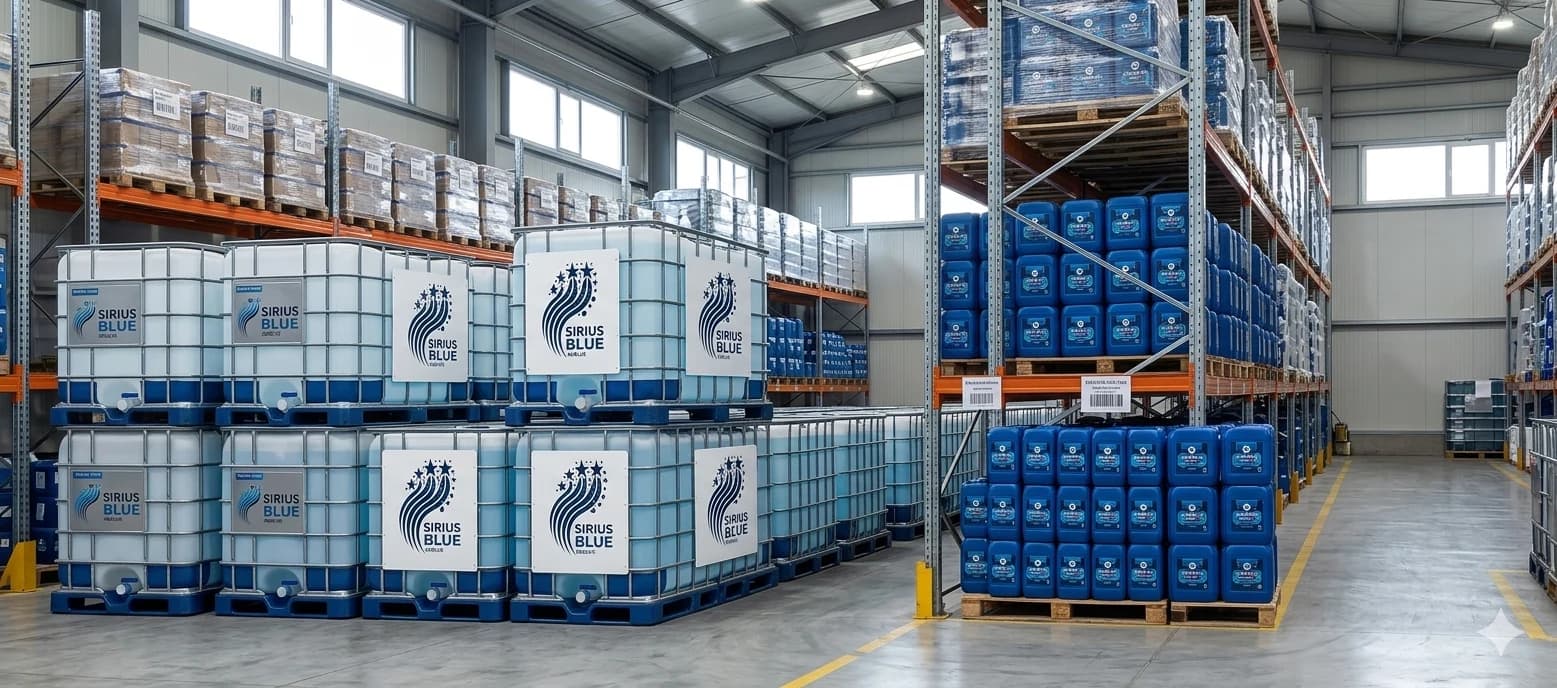
| 1000L IBC tote | Fleet depots and sites with steady use | Keep under a roof. The tank is translucent plastic, so shade — and a cover — keeps the fluid cooler. Use a dedicated dispensing pump and keep the valve clean. |
The packaging guide goes further into which size suits which operation.
Does AdBlue freeze?
It freezes at around −11°C. That is rarely a concern in Saudi Arabia, and even where it happens, freezing does not damage the fluid: once thawed it can be used normally, which is why SCR systems have tank heaters. In the Kingdom, heat is the problem to plan for, not cold.
How to check whether stored AdBlue is still good
If you are unsure about older stock:
- Check the production date and estimate how long it has spent hot.
- Smell it. A strong ammonia smell suggests significant breakdown.
- Measure the concentration with an AdBlue refractometer. ISO 22241-1 allows urea content between 31.8% and 33.2%; a reading outside that range means the fluid should not be used.
- Send a sample to a laboratory if you hold a large volume and need certainty. A full ISO 22241-1 analysis also covers impurities a refractometer cannot detect.
Our ISO 22241 guide explains the refractometer check step by step.
Quick answers
Can I store AdBlue in a steel container?
Only stainless steel. Ordinary carbon steel, galvanised steel, copper, brass and aluminium corrode in contact with AdBlue, and the dissolved metal contaminates the fluid.
Is it safe to keep AdBlue in a truck cab?
A sealed jerrycan for emergency top-ups is common practice, but cabs and toolboxes get very hot in summer. Carry only what you need, and replace it regularly rather than leaving the same jerrycan on board for months.
What does expired AdBlue look like?
Usually exactly like fresh AdBlue. A strong ammonia smell is a warning sign, but the reliable check is a refractometer reading of the urea concentration.
Can old AdBlue be mixed with new?
Mixing does not restore old fluid. If the old stock is out of specification it pulls the mixture out with it. Test older stock before using it, and never top up part-used containers with fresh fluid.
Key points
- AdBlue lasts at least 18 months at 25°C, 12 months at 30°C and 6 months at 35°C (ISO 22241-3).
- Saudi summer heat can keep outdoor storage above 35°C for much of the day.
- Store it cool, shaded, sealed and away from incompatible metals.
- Rotate stock, and order volumes your fleet will use well within the shelf life.
- Shelf life starts at production, so shorter supply chains deliver fresher fluid.
SiriusBlue blends AdBlue in Riyadh and delivers it from there, so it reaches you without an ocean crossing. If you would rather plan deliveries around your consumption than hold months of stock, send us your volumes.