

AdBlue tank capacity varies enormously by vehicle class: roughly 8–20 litres for a diesel passenger car, 15–25 litres for a light van, and anywhere from about 40 to 150 litres for a heavy truck, depending on the make and model. There is no single figure for "a truck" — manufacturers size the tank to suit how far apart they want refills to be, not to a fixed rule, so the only reliable number for a specific vehicle is the one in its handbook or on its SCR system display.
Why tank size varies so much
Two things drive the design choice:
- How much AdBlue the vehicle is expected to use. A heavier vehicle working harder burns more diesel and doses proportionally more AdBlue — see our consumption guide for the maths behind that relationship.
- How often the manufacturer wants the tank refilled. Some manufacturers size the AdBlue tank to last roughly as long as a diesel tank between fills, so a driver can top up both at once. Others size it to match a service interval instead, so AdBlue is only checked at scheduled maintenance. Neither choice is "correct" — they're different assumptions about driver behaviour.
That's why two trucks of similar size and payload, from different manufacturers, can carry very different AdBlue tank sizes.
Typical ranges by vehicle type
| Vehicle type | Typical AdBlue tank capacity |
|---|---|
| Diesel passenger car | 8–20 L |
| Light commercial van | 15–25 L |
| Medium rigid truck | 20–50 L |
| Heavy tractor unit (long-haul) | 40–150 L, commonly 50–110 L |
| Bus / coach | 40–120 L |
These are typical ranges seen across the market, not a specification for any particular model — always check the vehicle's own handbook or its SCR display for the exact figure. Non-road equipment such as generators and construction machinery varies just as widely; see our guide to AdBlue for heavy equipment for how tank sizing works there.
Tank size and consumption together set your refill interval
Knowing the tank size only matters alongside your actual consumption rate. As a rough guide, using the 3–5% dosing range from our consumption guide:
- A heavy tractor unit with a 100L tank, burning 35 L/100 km of diesel, doses roughly 1–1.75 litres of AdBlue per 100 km. That tank lasts very roughly 5,700–10,000 km before needing a refill — though real range depends heavily on load, route and driving style.
- A light van with a 20L tank and much lower diesel use per 100 km covers proportionally more distance on a full AdBlue tank, simply because it burns less fuel overall.
The point isn't the exact numbers — they vary by vehicle and duty cycle — it's that tank size alone tells you little without a consumption figure to go with it.
Why this matters for fleet planning
For a single vehicle, the dashboard's AdBlue level warning is enough. For a fleet, tank size differences between models change how you plan supply:
- Mixed fleets need mixed planning. A fleet running several truck makes with different tank sizes can't use one refill interval for all of them.
- Smaller tanks need more frequent access to fluid, which argues for jerrycans kept on vehicles that travel far from base — see our packaging guide.
- Larger tanks on long-haul trucks tolerate a bulk-refill routine at the depot better, since the vehicle doesn't need topping up as often.
Never guess a tank's capacity from the vehicle's size
A bigger truck doesn't automatically mean a bigger AdBlue tank — tank sizing depends on the manufacturer's design choices as much as the vehicle's class. The only reliable sources are:
- The vehicle handbook or owner's manual.
- The SCR system's own display, which usually shows remaining AdBlue as a percentage or a distance-to-empty estimate.
- The manufacturer's published specifications for that exact model and year.
How SiriusBlue supports fleets with mixed tank sizes
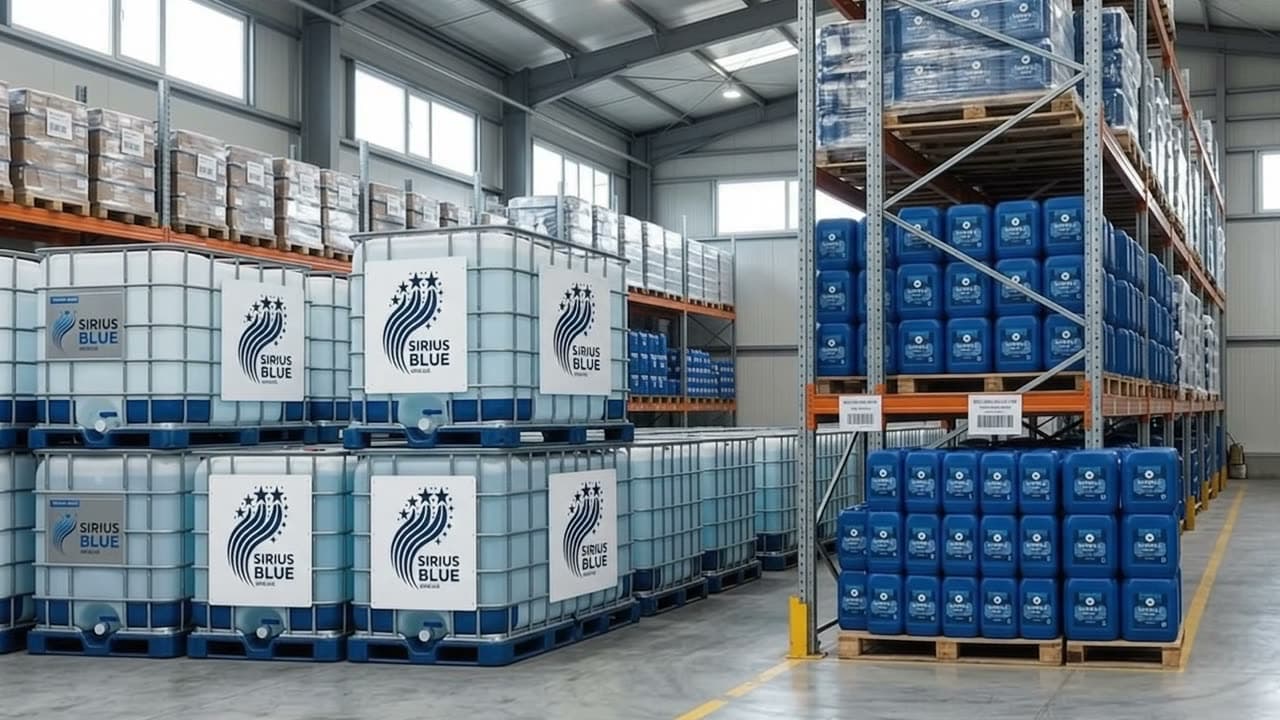
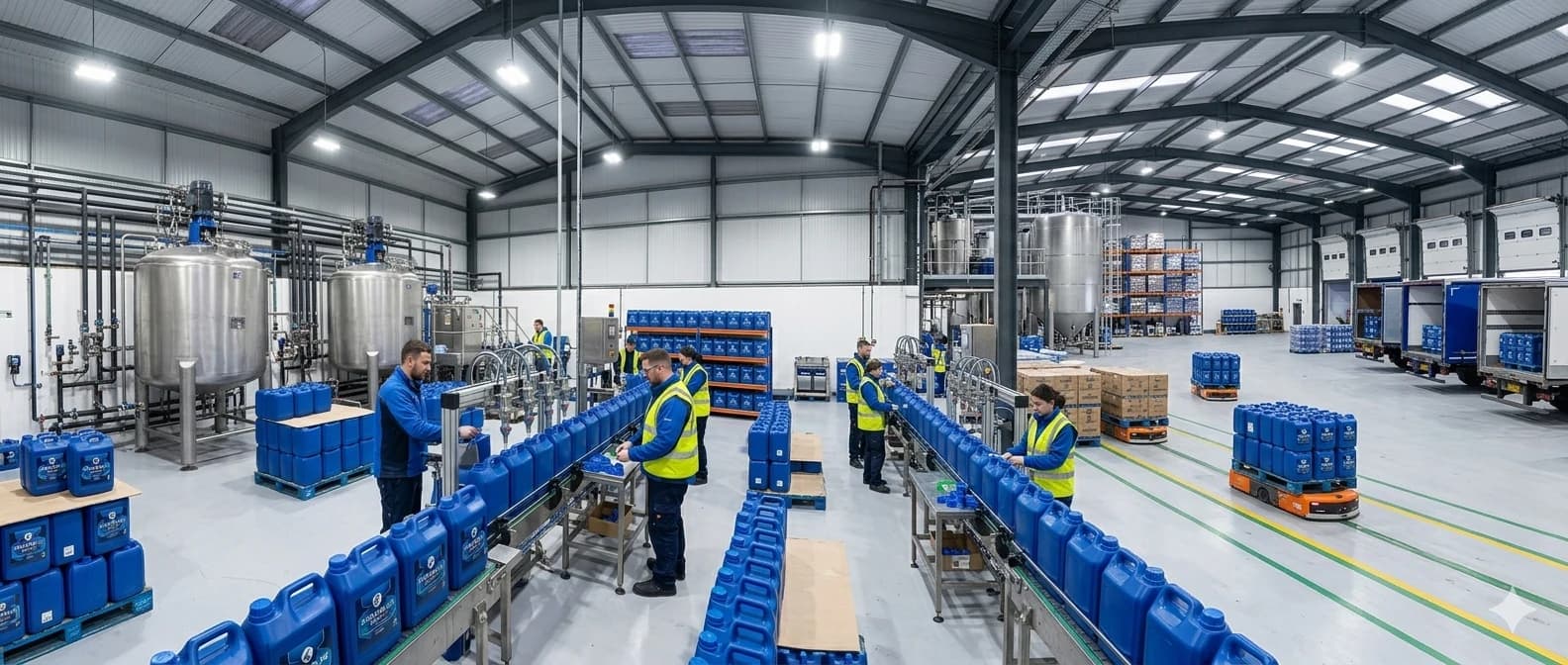
SiriusBlue supplies AdBlue from its Riyadh plant in 10L and 20L jerrycans, 200L drums on request and 1000L IBC totes, so a fleet running vehicles with very different tank sizes can carry the right container for each — jerrycans for smaller tanks and field top-ups, bulk for depot refills of larger tanks. Tell us your fleet mix and we'll recommend a packaging split and a delivery schedule.
Quick answers
How much does a heavy truck's AdBlue tank hold?
Typically 40 to 150 litres, most commonly in the 50–110 litre range, but it varies by manufacturer — check your vehicle's handbook for the exact figure.
Does a bigger truck always have a bigger AdBlue tank?
No. Tank size depends on the manufacturer's design assumptions about refill intervals as much as on the vehicle's size or payload.
How far can a full AdBlue tank take a heavy truck?
Very roughly 5,700–10,000 km for a 100-litre tank at typical highway consumption, but this depends heavily on load, terrain and driving style — see our consumption guide for the full calculation.
Where do I find my vehicle's exact AdBlue tank capacity?
In the vehicle handbook, on the manufacturer's specification sheet, or from the SCR system's own dashboard display.
Key points
- AdBlue tank capacity ranges from roughly 8–20L for cars to 40–150L for heavy trucks, and varies by manufacturer even within the same class.
- Manufacturers size the tank around refill intervals, not a fixed rule — there's no single "truck" figure.
- Tank size only tells you your refill interval once paired with your actual consumption rate.
- Mixed fleets need mixed supply planning: jerrycans for smaller-tank vehicles on the road, bulk for depot refills of larger tanks.
- Always confirm the exact capacity from the vehicle handbook or SCR display rather than estimating from the vehicle's size.