

The right AdBlue packaging depends mainly on how much you use and where you fill. Jerrycans of 10 or 20 litres suit workshops, small fleets and top-ups away from base. A 200-litre drum suits a mid-size workshop or depot with a drum pump. A 1000-litre IBC tote is the most economical and least wasteful choice for any site using several hundred litres a month or more. Most fleets end up with two formats: bulk at the depot and jerrycans in the field.
The options at a glance
| Packaging | Fluid weight (approx.) | Best for | Dispensing |
|---|---|---|---|
| 10L jerrycan | 11 kg | Retail, workshops, single vehicles, emergency top-ups | Pour from the built-in spout |
| 20L jerrycan | 22 kg | Small fleets, service centres, vehicles that refuel away from base | Pour, or hand pump |
| 200L drum | 218 kg | Mid-size workshops and depots | Drum pump |
| 1000L IBC tote | 1,090 kg | Fleet depots, construction sites, logistics hubs | Dispensing pump and nozzle, or gravity valve |
Weights are for the fluid alone, at a density of 1.09 kg per litre, and exclude the container.
10L and 20L jerrycans
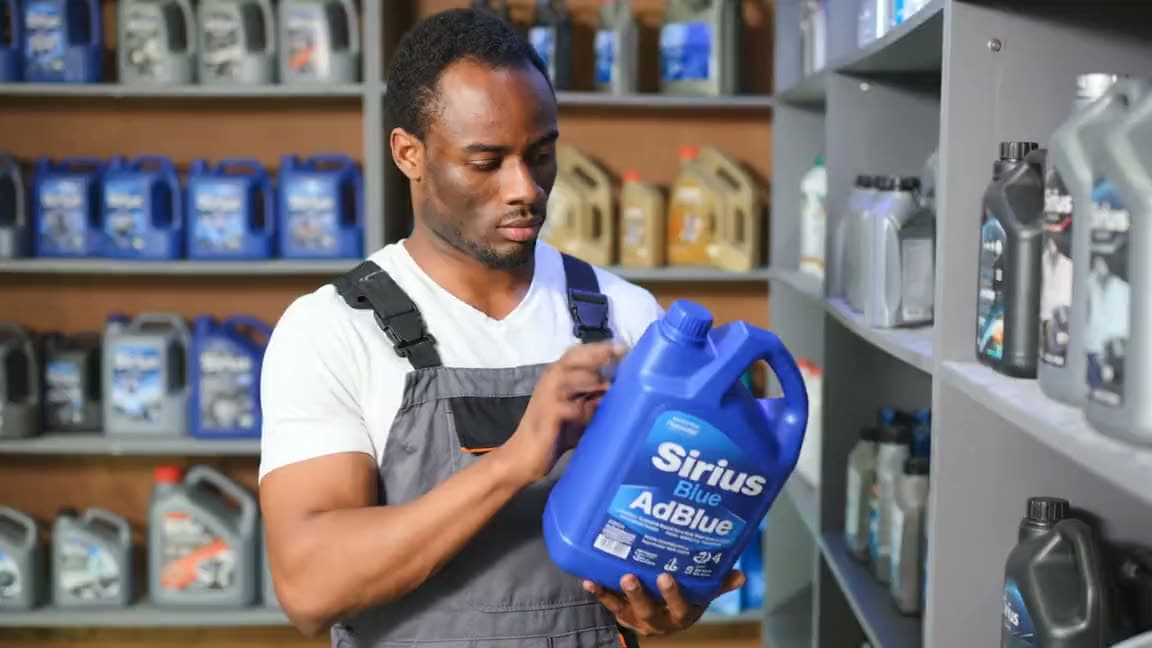
Jerrycans are sealed, easy to carry and need no equipment.
Choose jerrycans if:
- A site uses less than about 200 litres a month.
- Your vehicles refuel in many places, so bulk storage at one depot does not help.
- You want an emergency supply on board or in site vehicles.
- You sell AdBlue to drivers, as a workshop or fuel station.
Watch out for:
- Cost per litre. Small packs carry more packaging for each litre of fluid.
- Handling time. Pouring many jerrycans takes time, and spills crystallise as they dry.
- Heat. Jerrycans left in cabs, toolboxes or the sun heat up fast — see the storage guide.
- Reuse. Never fill an empty jerrycan with anything else, and never refill it with AdBlue from an unknown source.
200L drums
Drums sit between jerrycans and bulk. They take up less space than a stack of jerrycans holding the same volume and can be emptied with a simple hand or electric drum pump.
Choose drums if:
- A workshop or depot uses a few hundred litres a month but has no forklift or space for an IBC.
- You want fewer containers to handle without committing to bulk.
Watch out for:
- Weight. A full drum holds around 218 kg of fluid and needs a drum trolley or forklift to move.
- Equipment. Use a pump made for AdBlue, keep it for AdBlue only, and keep the bung closed between uses.
At SiriusBlue, 200-litre drums are supplied on request.
1000L IBC totes
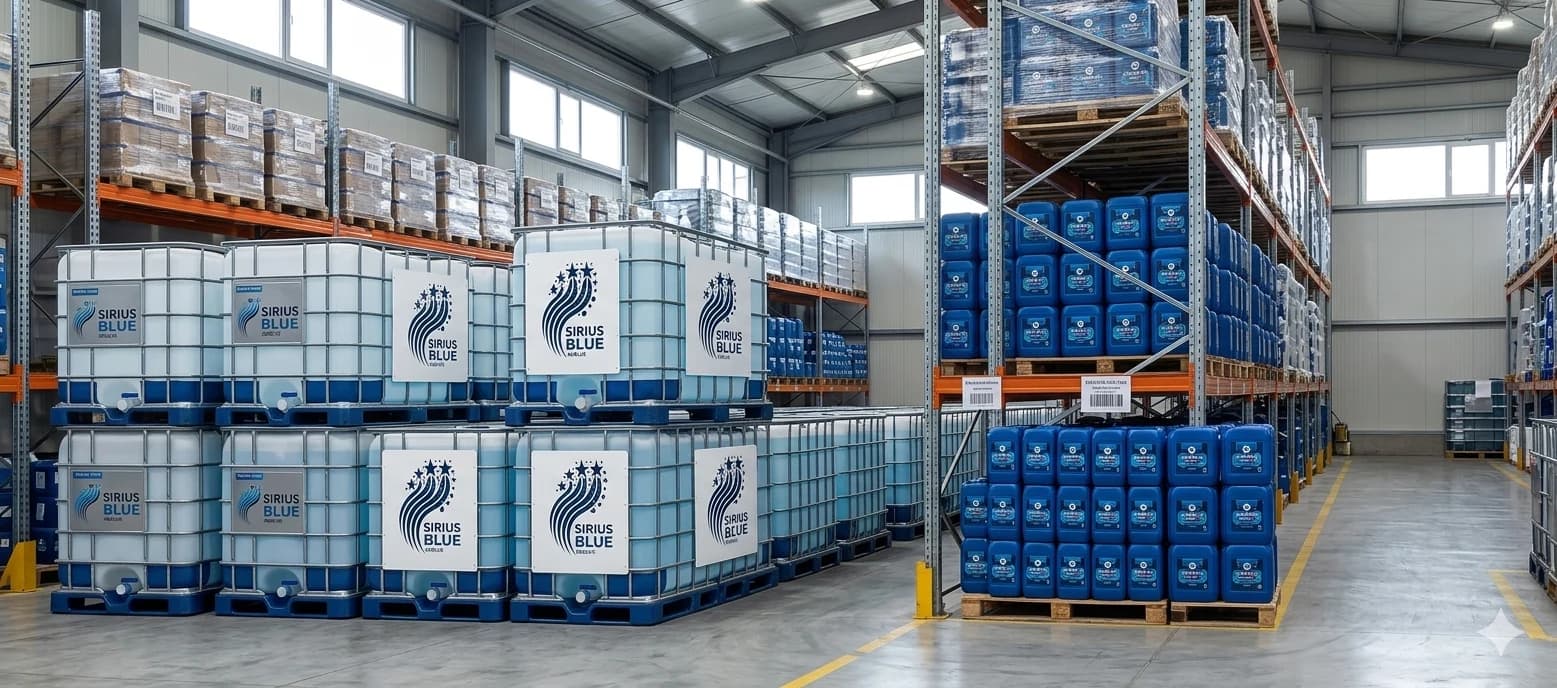
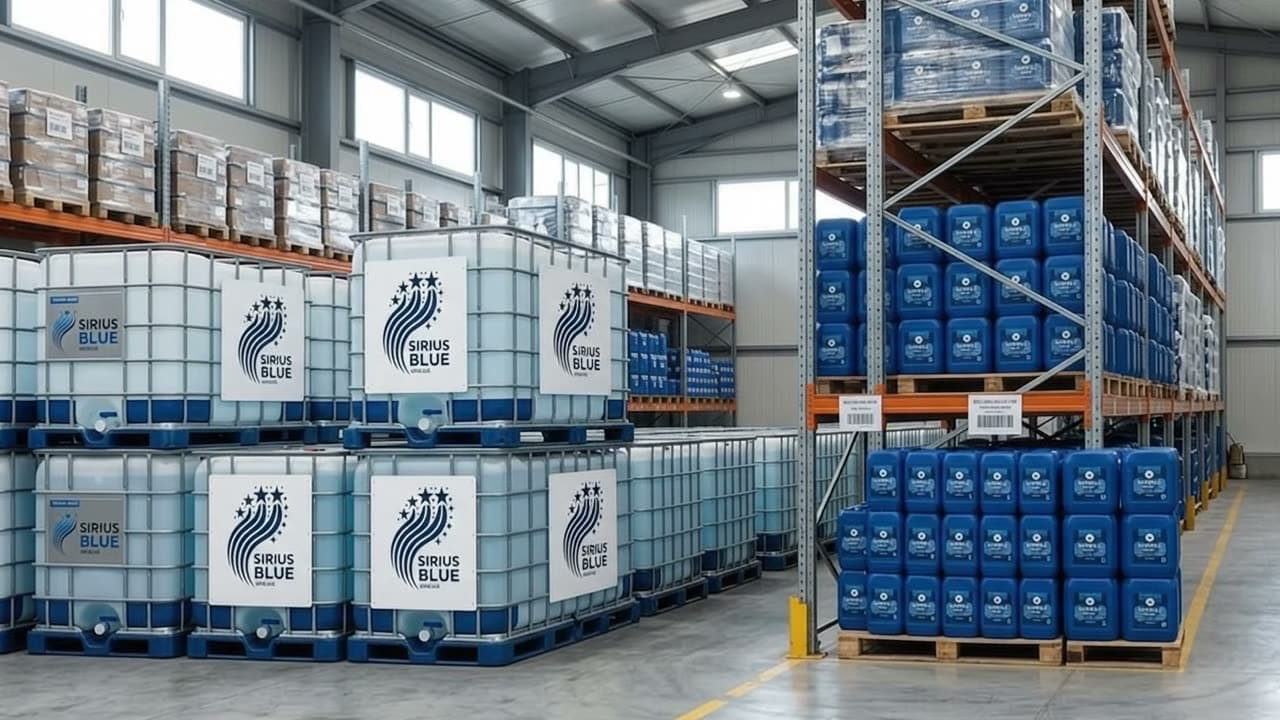
An IBC — intermediate bulk container — is a plastic tank in a steel cage on a pallet, with a valve at the bottom and a filling opening on top.
Choose IBC totes if:
- A depot or site uses several hundred litres a month or more.
- You have a forklift or pallet truck to move a full tote weighing more than a tonne.
- You want the lowest cost per litre and the least packaging waste.
Watch out for:
- Space and shade. A tote needs a level, covered spot out of direct sun. The tank is translucent, so a cover helps too.
- Dispensing equipment. Fit a pump and nozzle made for AdBlue, or use the gravity valve with a clean, dedicated hose.
- Turnover. Once opened, keep the tote closed between uses and plan to finish it well within the fluid's shelf life in your conditions.
- Contamination. Valves and connections are where dust and dirt get in. Keep them capped and clean.
For a sense of scale, a fleet of 20 trucks each covering 10,000 km a month uses roughly two to four totes a month. The consumption guide shows the working.
Choosing by monthly volume
| Monthly use at one site | Usual choice |
|---|---|
| Under 100 litres | 10L or 20L jerrycans |
| 100–400 litres | 20L jerrycans or 200L drums |
| 400 litres and above | 1000L IBC totes, plus jerrycans for field top-ups |
Treat these as starting points, not rules. Space, equipment, delivery frequency and storage temperature all move the right answer.
Contamination risk by format
Every transfer from one container to another is a chance for dirt, dust, water or residue to get in. That is the hidden cost of the wrong packaging:
- Sealed jerrycans carry the lowest contamination risk per fill, provided the spout or funnel is clean.
- Drums and IBC totes are only as clean as the pump, hose and nozzle attached to them. Dedicated equipment, used for nothing but AdBlue, is essential.
- Decanting from bulk into smaller containers on site multiplies the risk. If vehicles need jerrycans, buy jerrycans rather than filling your own.
Contamination is invisible and can damage SCR systems permanently — see AdBlue problems and warning lights.
Packaging from SiriusBlue
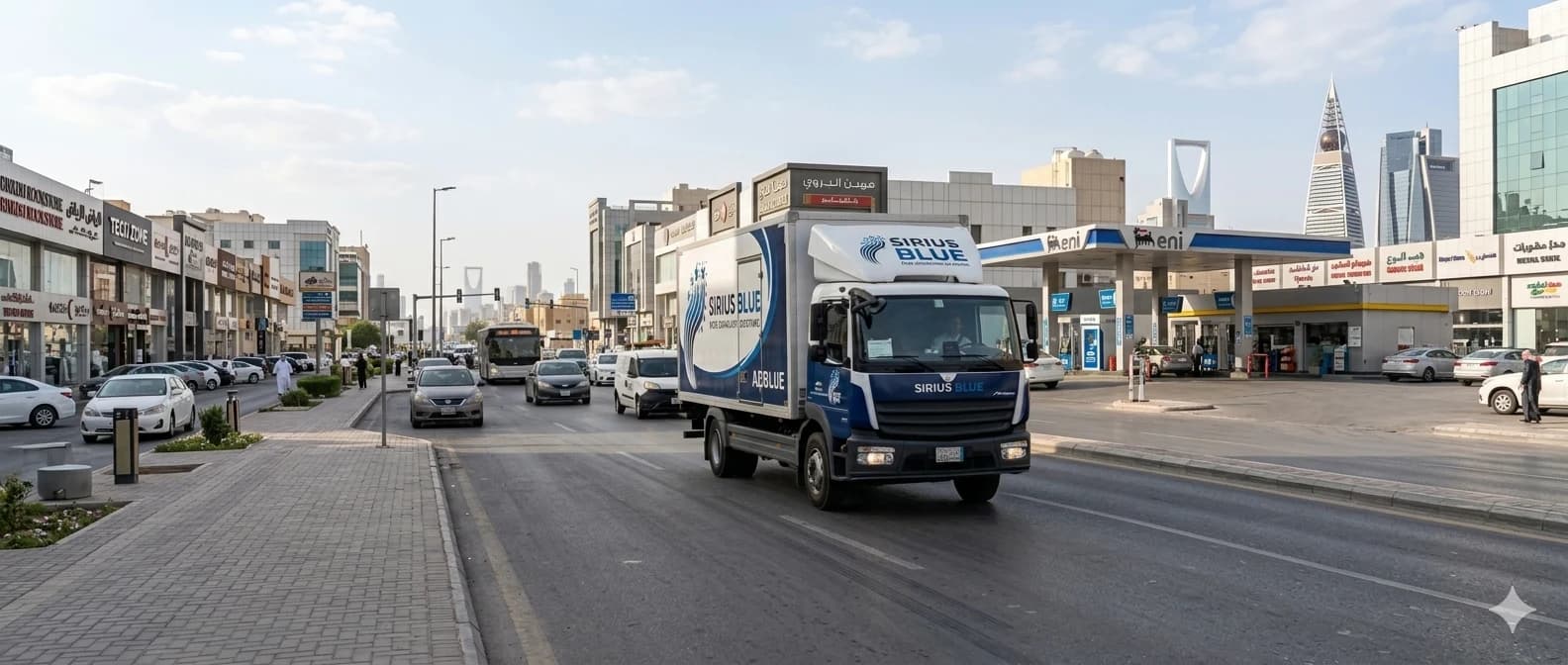
SiriusBlue fills AdBlue at its plant in Riyadh in four formats:
We deliver from Riyadh to every region of the Kingdom on a standing schedule. Many customers combine formats: totes for the depot and jerrycans for vehicles on the road. Tell us your volumes and sites and we will recommend a mix and quote for it.
Quick answers
Can I refill an IBC tote with AdBlue?
Only if the tote has held nothing but AdBlue and has been kept clean. Never refill a tote that held any other liquid. Every refill adds contamination risk, which is why many operators take fresh, supplier-filled totes instead.
How do I dispense AdBlue from an IBC?
With a pump and nozzle made for AdBlue, or with the tote's bottom valve and a clean hose used for nothing else. Keep the valve capped when it is not in use.
How much does a full 1000L IBC of AdBlue weigh?
About 1,090 kg of fluid, at 1.09 kg per litre, plus the weight of the tote and its cage.
Should I keep jerrycans if I buy in bulk?
Usually, yes — for vehicles that refuel away from the depot, and as an emergency supply if a truck runs low on the road.
Key points
- Jerrycans: small volumes, many locations, emergency top-ups.
- 200L drums: mid-size workshops without the space or equipment for bulk.
- 1000L IBC totes: the lowest cost per litre for depots using hundreds of litres a month.
- Use only dedicated, AdBlue-compatible dispensing equipment.
- Match order sizes to consumption so stock is used well within its shelf life.