

AdBlue is a clear, colourless liquid, and that is exactly the problem — diluted or poorly made fluid looks identical to the genuine article. You cannot tell weak, contaminated or counterfeit AdBlue from correctly made fluid by looking at it, smelling it or feeling it. What you can check are the things around the fluid: the packaging, the paperwork, the price, and — in about a minute, with an inexpensive instrument — the actual urea concentration.
Why this happens
Genuine AdBlue is a precise chemical product: 31.8–33.2% urea by mass, blended with deionised water, made to the ISO 22241 specification. Producing it correctly costs money — the urea has to be automotive grade, the water has to be deionised, and every batch needs testing. Cutting any of those corners — diluting with ordinary water, using cheaper agricultural-grade urea, skipping testing — produces a fluid that looks the same but performs and lasts differently, and in the worst cases can damage an SCR system. Selling that fluid as full-strength AdBlue is more profitable than selling it honestly, which is why counterfeit and diluted product exists in every market that uses AdBlue at scale.
Signs worth checking before you buy
None of these proves a product is fake on its own, but more than one together is a reason for caution:
- No production date or batch number on the container. Genuine manufacturers track batches so problems can be traced; an unmarked container often means they can't, or won't.
- Vague or missing supplier information. A label with no manufacturer name and address, or a seller who won't name one, is a warning sign.
- A price noticeably below the rest of the market. Diluted fluid is cheaper to make. If a price looks too good, ask why.
- Inconsistent packaging. Faded printing, colours that don't match other batches from the same brand, or a seal that looks tampered with.
- A seller who can't produce a safety data sheet on request. Every legitimate AdBlue product has one.
- No answer when you ask what standard it's made to, or a certification claim that falls apart under a direct follow-up question.
The one test you can actually do yourself
Everything above is circumstantial. The one direct check available outside a laboratory is a refractometer reading, and it takes about a minute:
- Calibrate the refractometer with distilled water so it reads zero.
- Take a sample with a clean pipette from the container.
- Place two or three drops on the prism and close the cover plate.
- Read the scale. Most AdBlue refractometers are marked directly in percent urea.
- Compare against the standard. A genuine, correctly made product reads between 31.8% and 33.2%. Anything meaningfully outside that range — especially noticeably lower, which is what dilution looks like — should not go into a vehicle.
A refractometer costs a small fraction of what a single SCR repair does, and it catches the most common form of fraud: fluid stretched with extra water. Our full quality-checking guide covers the test in more detail and explains what it can't catch.
What a refractometer can't tell you
Concentration is only part of the specification. A refractometer reading in range does not confirm the water was properly deionised, or that metal and phosphate impurities are within ISO 22241's limits — those require laboratory analysis. This is exactly why the paperwork and supplier relationship matter as much as the field test: a refractometer catches obvious dilution on the spot, but trust in the contamination limits still comes from the manufacturer's own testing and documentation.
"Genuine" can mean more than one thing
Worth untangling, because suppliers sometimes blur it:
- Meets the ISO 22241 specification. Fluid that tests within every limit in the standard, regardless of who made it or whether that's been independently confirmed.
- Independently certified. A certification body has audited the manufacturer's process and product against the standard and issued a certificate. ISO itself does not certify products.
- Carries the licensed AdBlue® trademark. A separate trademark, licensed by the VDA to producers whose product meets the standard.
"Genuine" in the sense of "not diluted or counterfeit" is really about the first of these — does the fluid actually meet spec — and that's what the checks above are aimed at. Ask a supplier which of the three they're claiming, and for the documents behind it.
How SiriusBlue protects against this
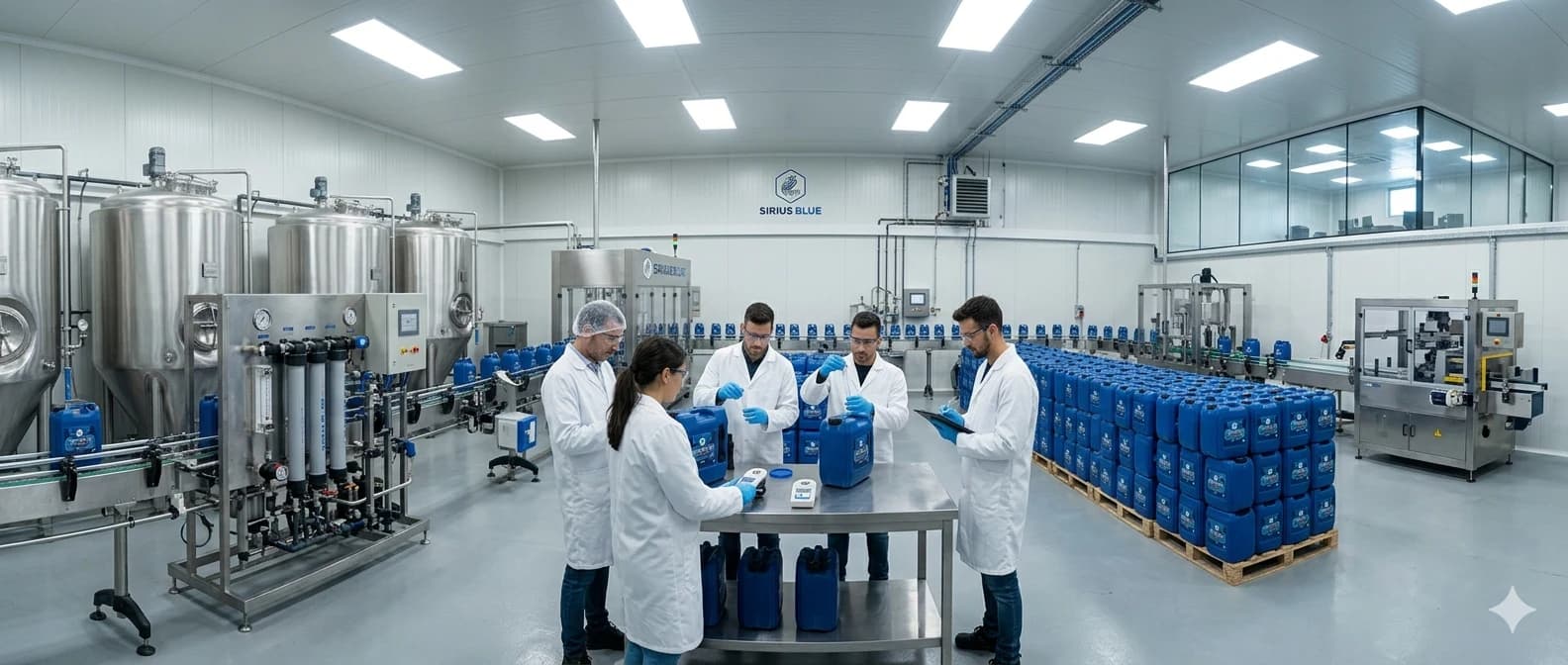
SiriusBlue blends AdBlue at a single plant in Riyadh, with every batch checked against the values on our current safety data sheet before release. We publish those values rather than just describing them, and every container carries traceable batch information back to that plant. If you ever have a reason to doubt a batch — ours or anyone else's — run the refractometer check above before it goes into a vehicle.
Quick answers
Can I tell fake AdBlue apart just by looking at it?
No. Genuine and diluted or counterfeit AdBlue both look like a clear, colourless liquid. Visual inspection tells you almost nothing about concentration or contamination.
What does diluted AdBlue do to a vehicle?
Weak fluid means the SCR system injects too little ammonia relative to what the control unit assumes, which raises NOx emissions and can eventually trigger a fault. Depending on what it was diluted with, it may also introduce contamination that damages the catalyst over time.
Is a low price always a sign of fake AdBlue?
Not always, but it's a reason to check further. Compare the price against the rest of the market and ask directly for the batch's tested values before assuming it's a good deal.
Does packaging alone prove AdBlue is genuine?
No. Packaging can be copied. The reliable checks are the paperwork behind the batch and, if in doubt, a direct concentration test.
Key points
- Diluted or counterfeit AdBlue is visually identical to the genuine product — you cannot tell them apart by looking.
- Missing batch numbers, vague supplier details and prices well below market are all warning signs.
- A refractometer test takes about a minute and directly checks urea concentration against the ISO 22241 range.
- A refractometer doesn't catch every problem — metal and phosphate contamination need laboratory testing.
- "Genuine" can mean meeting the specification, being independently certified, or carrying the licensed trademark — ask a supplier which they mean.