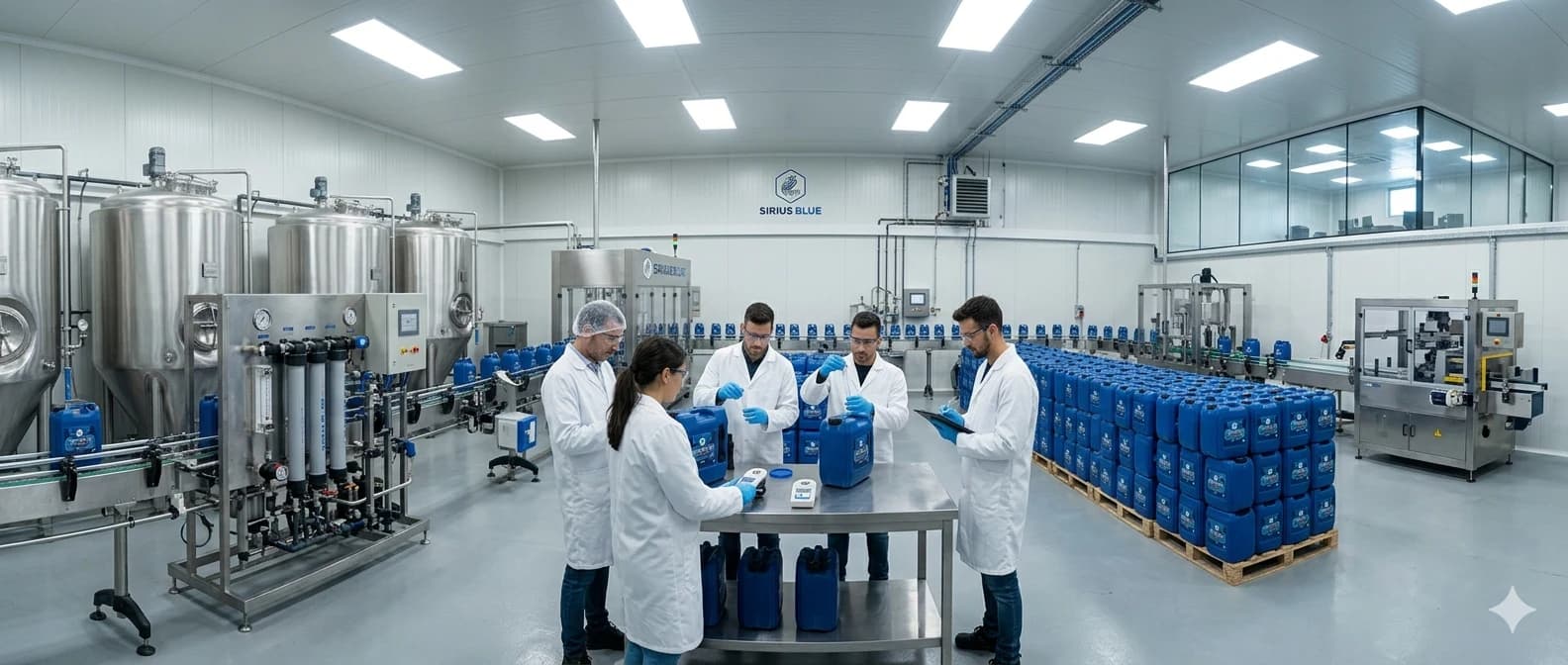



A good AdBlue supplier can show you a safety data sheet, name the plant that made the fluid, and tell you plainly whether it is ISO 22241 certified or built to meet the standard. If any of those three things is vague, keep asking. AdBlue looks the same whether it is correctly made or badly diluted, so the paperwork and the plant behind it matter more than the price on the label.
Start with documentation, not price
Price is the easiest thing to compare and the least useful one, because two jerrycans that look identical can hold fluid of very different quality. Before comparing cost per litre, ask every supplier for:
- A current safety data sheet (SDS) naming the manufacturer and its address.
- The values each batch is checked against — density, pH, urea content — and how they are measured.
- Production dates or batch numbers on the packaging.
- A plain statement of certification status. "Meets ISO 22241", "certified to ISO 22241" and "AdBlue® licensed" are three different claims — see our guide to checking AdBlue quality for what each one actually means.
A supplier who answers all four without hesitation has almost certainly got the manufacturing controls behind them. One who won't, or can't, is a risk regardless of price.
Where the fluid is actually made
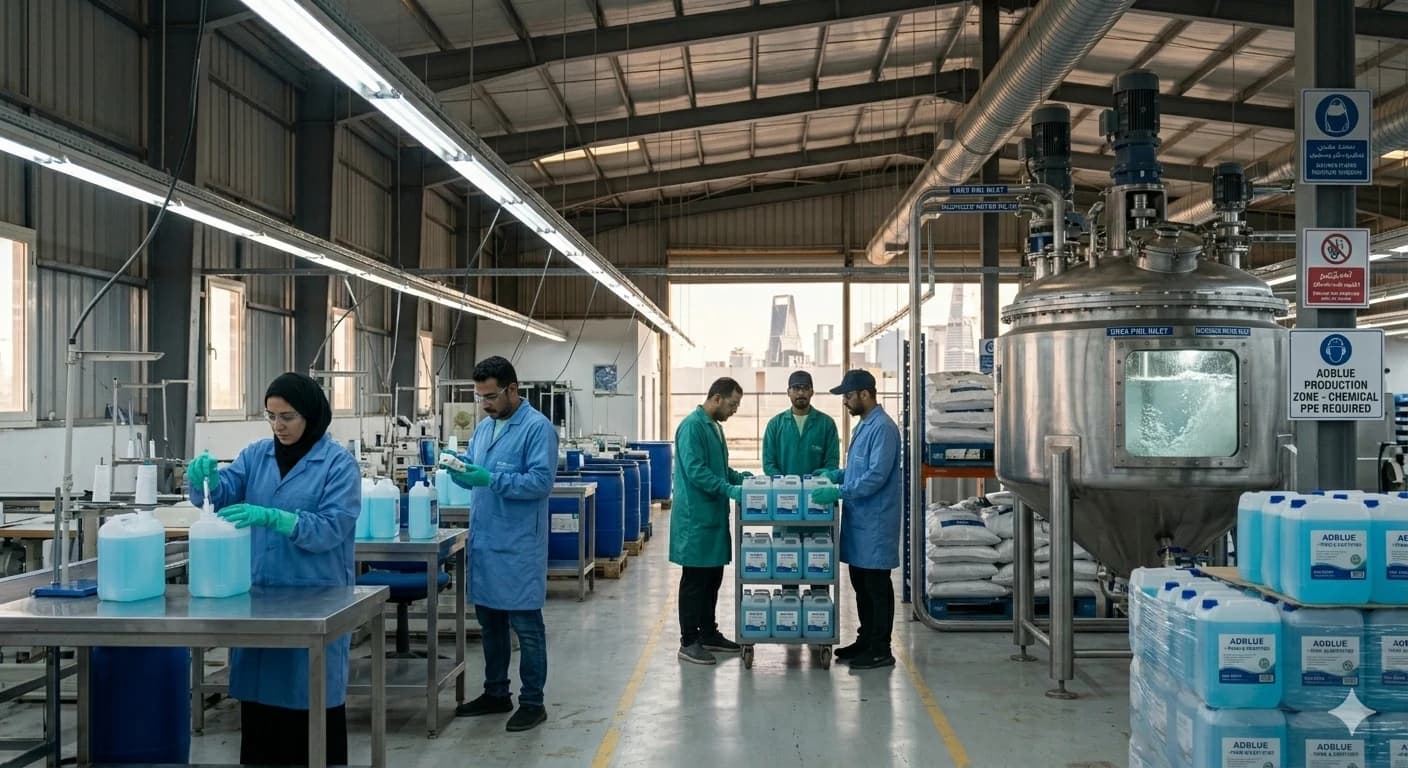
AdBlue degrades faster in heat, and Saudi summers are hard on it — a jerrycan left in a hot warehouse or a shipping container for months can be out of specification before it ever reaches a vehicle. That makes the manufacturing location a real question, not a formality:
- Local production means shorter time between blending and delivery, and less time spent sitting in transit heat.
- Imported product has to survive shipping, port storage and onward transport before it even reaches a Saudi warehouse — ask how it was stored along the way, not just where it started.
Ask directly: where is this fluid blended, and how old is this batch? A supplier that can answer both without checking is handling stock the way it should be handled.
Can they supply the format and volume you need?
A supplier that only stocks small jerrycans is a poor fit for a depot using hundreds of litres a month, and one geared entirely to bulk IBC totes may not want to bother with a handful of 10-litre packs for site vehicles. Match the supplier to your actual pattern of use:
- Single vehicles or occasional top-ups: 10L or 20L jerrycans.
- Mid-size workshops: 200L drums.
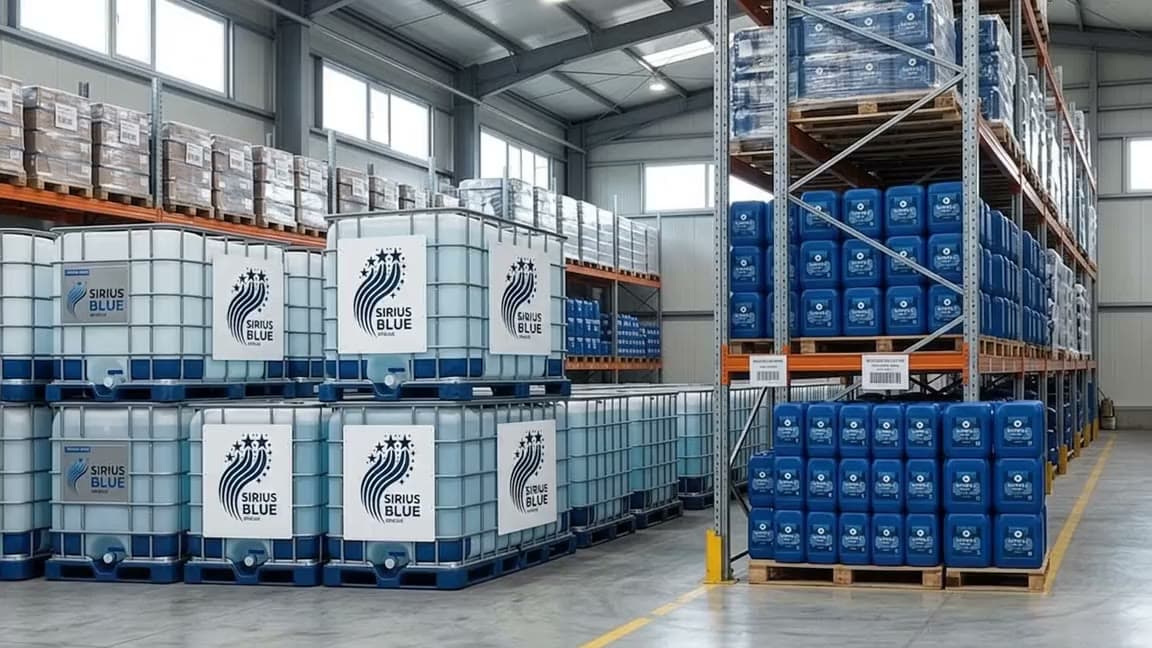
- Fleet depots and construction sites: 1000L IBC totes, usually alongside jerrycans for vehicles that refuel away from base.
Our packaging guide walks through the trade-offs between them in more detail. A supplier that offers all four formats can grow with you as volume changes, rather than forcing a switch later.
Delivery reliability matters as much as the fluid
An AdBlue shortage stops a fleet the same way a fuel shortage does — an SCR-equipped diesel engine will restrict performance or refuse to restart once the tank runs dry. When you're assessing a supplier, ask:
- Do they offer a standing delivery schedule, or only one-off orders?
- What is the lead time for a repeat order, and does it change during peak demand?
- Do they deliver to your actual sites, not just a central depot?
A supplier who can commit to a schedule matched to your consumption is worth more than one who is marginally cheaper but unpredictable. Our own consumption guide has the maths for working out roughly how much your fleet uses a month, which is the number to bring to that conversation.
Red flags worth walking away from
- No fixed manufacturing address, or reluctance to name one.
- Prices well below the rest of the market, with no explanation — heavily diluted fluid is cheaper to make and impossible to tell apart by eye.
- No production dates or batch numbers on the packaging.
- Certification language that doesn't hold up under a direct question. If a label says "certified" and nobody can name the certifying body, treat it with caution.
- No willingness to share the values a batch was tested against. A supplier confident in their fluid will show you the numbers.
None of these on its own is proof of a problem, but more than one together is a reason to look elsewhere.
How SiriusBlue answers these questions
SiriusBlue blends AdBlue at a single plant in Riyadh and supplies fleets, construction sites and fuel stations across the Kingdom in 10L, 20L, 200L and 1000L formats, with standing delivery schedules for regular customers. We publish our current specification values rather than just describing them — see the homepage — and we are direct about where we stand on certification: our product is built to meet the ISO 22241 standard, and independent certification is in progress. We do not describe it as certified until that certificate is issued. Tell us your volumes, packaging mix and delivery city and we'll put together a quote.
Quick answers
Is the cheapest AdBlue supplier usually the best choice?
Not by itself. Genuine, correctly stored AdBlue has a real production cost, so a price far below the rest of the market is more often a sign of dilution or poor handling than of efficiency. Compare documentation and manufacturing location before comparing price.
Does it matter if AdBlue is imported rather than made in Saudi Arabia?
It can. Imported fluid spends longer in transit and storage before reaching you, which matters because heat degrades AdBlue over time. Ask any supplier — local or imported — how the fluid was stored before it reached their warehouse.
What's the difference between a supplier and a manufacturer?
A manufacturer blends the fluid itself and can show you its own plant and batch records. A distributor or reseller buys from a manufacturer and may or may not know those details first-hand. Neither is automatically better, but knowing which one you're dealing with tells you who to ask when something needs checking.
Should I ask for a sample before committing to a supplier?
It's reasonable to, especially for a first order at volume. A refractometer check on a sample takes about a minute and confirms the urea concentration is within range — see our quality guide for how.
Key points
- Ask every supplier for an SDS, tested values, production dates and a plain certification statement before comparing price.
- Manufacturing location matters because heat degrades AdBlue over time, and imported fluid spends longer in transit.
- Match the supplier's packaging formats to your actual pattern of use, not the other way round.
- A standing delivery schedule matched to your consumption is worth more than a marginally lower price.
- Prices well below the market, vague certification claims and no batch traceability are all reasons to keep looking.